
Top 3 Aluminum Composite Panel Thicknesses Ranked: 3mm, 4mm, and 5mm ACP by Project Use
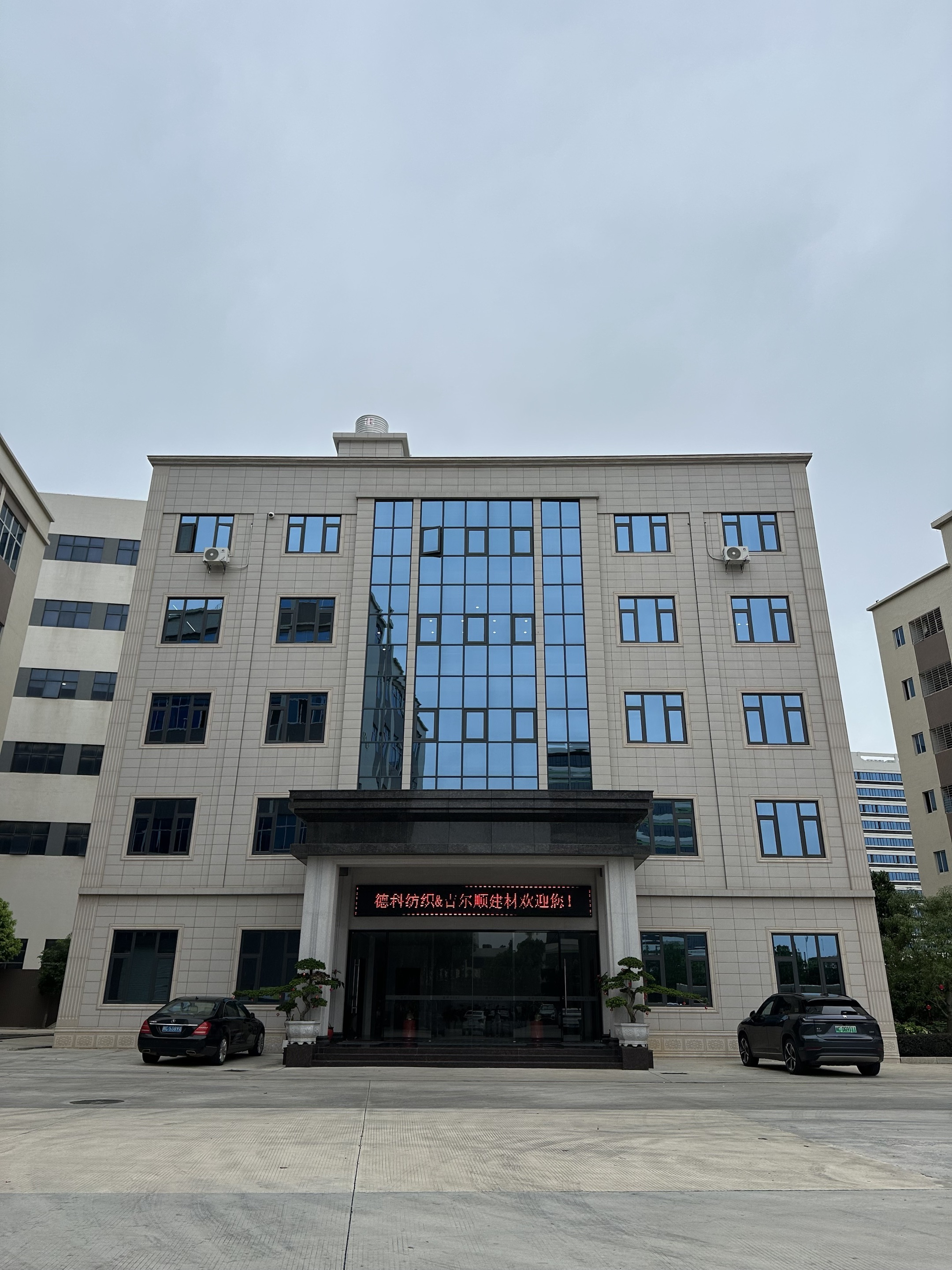
Figure 1 — Building curtain wall and exterior wall decoration is the project type where 3mm aluminum composite panel is positioned first in this ranking.
Three panel thicknesses carry most aluminum composite panel orders: 3mm, 4mm and 5mm. Ranked by how often each one matches a stated project brief, 3mm comes first for building curtain wall and exterior wall decoration plus signage and advertising billboards, 4mm comes second for interior decoration across the PVDF, mirror, wood grain, marble grain, brushed, nano self-cleaning and fireproof categories, and 5mm comes third for furniture factory applications. All three run at widths of 1220mm, 1250mm and 1500mm, with aluminium skin from 0.05mm to 0.50mm, alloy grades AA1100, AA3003 or AA5005, and a PE or fireproof core.
JIERSUN — Jiersun (Fujian) Decorative Building Materials Co., Ltd. — is an aluminum composite panel manufacturer founded in 2006 and based in Jinjiang, Fujian, China, producing ACP for building facades, interior decoration and commercial projects. This article ranks the three thicknesses by project fit, then sets out the selection levers, the purchasing terms and the acceptance criteria a buyer can actually work with.
What panel thickness actually controls
Panel thickness is the total thickness of the sandwich: two aluminium skins bonded to a core. It is not the aluminium skin thickness, and the two numbers are regularly confused in quotations. Two suppliers can both quote a 4mm panel — one with a 0.21mm skin and one with a 0.30mm skin. The spec sheet reads the same; the panel behaves differently on a facade.
Five specification levers move together on every ACP order:
- Panel thickness: 3mm, 4mm and 5mm are the three covered here; the same product family also runs 6mm and 8mm.
- Aluminium skin thickness: 0.05mm to 0.50mm.
- Alloy grade: AA1100, AA3003 or AA5005.
- Core: PE core or fireproof core.
- Width: 1220mm, 1250mm or 1500mm.
Two mistakes follow from treating thickness as a single number. The first is over-specifying — buying a thicker panel to fix a flatness or waviness problem that actually comes from skin gauge, alloy choice, fabrication or storage. The second is under-specifying — buying a thin panel for a wide, lightly supported span, then paying for rework on site. Thickness is a starting point, not a conclusion.
Industry background: what is moving behind the thickness decision
ACP demand is concentrated in Asia-Pacific, which held 54.8% of 2025 global revenue according to Market Research Future. The same publisher reports a global market of USD 9.17 billion in 2025, projected to reach USD 17.39 billion by 2035 at a 6.6% compound annual growth rate.
Those figures are not universal. Fortune Business Insights estimates USD 7.00 billion in 2025 rising to USD 14.35 billion by 2034 at 8.31%, because scope and methodology differ between research houses. The direction — steady growth — is consistent; the exact value is publisher-specific and should not be blended across sources.
Surface mix matters more to a thickness decision than headline market size. PVDF coated panels accounted for 36.5% of 2025 revenue in the Market Research Future dataset, which reflects how exterior and high-exposure work is normally specified. Two technical anchors are worth keeping in the project file:
- Customs: ACP of aluminium alloys with a thickness above 0.2mm is classified under HS code 76061230.
- Fire classification: fire-resistant ACP with a mineral core can achieve Euroclass A2-s1, d0 under EN 13501-1, as published by Mitsubishi Chemical for its ALPOLIC/fr product line.
How these three thicknesses were ranked
This is a practical ordering for specification work, not a quality ranking and not a market-share ranking. A 5mm panel is not better than a 3mm panel; it answers a different brief. The order reflects where each thickness lands when a buyer states the application first: exterior wall and signage (3mm), interior decoration across the decorative surface range (4mm), and furniture factory production (5mm).
Rank 1 — 3mm aluminum composite panel: curtain wall, exterior wall and signage
Where 3mm fits
3mm ACP is positioned for building curtain wall and exterior wall decoration, and for signage and advertising billboard work. It covers the widest combined application band of the three thicknesses, which is why it ranks first: exterior cladding and signage together account for more discrete project briefs than interior decoration or furniture production alone.
Why this thickness suits the job
A 3mm panel uses less core and less aluminium than a 4mm or 5mm panel in the same format, which matters when a facade or billboard is measured in hundreds of square metres and panels are handled and lifted into place by installation crews. It is available in all three standard widths — 1220mm, 1250mm and 1500mm — so facade module planning does not force a format change.
Specification levers for exterior and signage work
- Coating: PVDF coating is the standard choice for exterior exposure, for weather resistance, UV protection and long-term colour stability.
- Easy-clean surfaces: nano self-cleaning panels suit facades where cleaning access is difficult.
- Alloy: AA3003 or AA5005 where corrosion resistance is a priority; AA1100 for general work.
- Skin thickness: for wide, wind-loaded facade panels, work toward the upper part of the 0.05mm to 0.50mm skin range rather than the bottom.
- Core: fireproof core where the facade standard applies a fire classification; PE core where it does not.
Limits worth writing into the spec
Thin panels place more demand on the substructure and on fixing spacing, and dark colours in high-UV environments put more load on the coating system. Both are design issues that a coating and skin selection can address — they are not solved by switching to a thicker panel after the fact.
Figure 2 — Panel thickness, width, alloy and core are set at production, which is why the specification must be locked before the coil is cut.
Rank 2 — 4mm aluminum composite panel: interior decoration across surface categories
Where 4mm fits
4mm ACP is positioned for interior decoration, and it is the thickness that carries the widest surface range: PVDF coated, mirror, wood grain, marble grain, brushed, nano self-cleaning and fireproof aluminum composite panels. Interior wall and ceiling work is a large application band, but a narrower one than exterior cladding plus signage combined, which is why it ranks second.
Why this thickness suits the job
Interior panels are judged on visible flatness over large areas and on how the surface reads under artificial light. The extra thickness over 3mm gives more stiffness across wide panel faces, so joints stay consistent where panels span between supports at typical interior spacing. It remains light enough for ceiling and wall mounting systems — ACP generally sits in the 3 to 5 kg/m² range, against roughly 6 to 15 kg/m² for solid aluminium panels.
Surface-specific notes for 4mm interior work
- Mirror: a high-gloss surface that shows handling marks, so protective film discipline during transport and fabrication matters more than on matte finishes.
- Wood grain and marble grain: pattern direction and batch matching need to be agreed at order stage, because decorative films are produced in runs.
- Brushed: a directional grain, so panels must be aligned consistently during installation.
- Nano self-cleaning: useful where interior or semi-exterior surfaces are hard to reach for cleaning.
- Fireproof: specified with a fireproof core where the interior application falls under a fire requirement.
Limits worth writing into the spec
Decorative surfaces carry handling risk that plain PVDF does not: scratches and film marks are visible on delivery and hard to correct on site. Order a small advance quantity, check the surface against the approved sample, and keep the film on until final installation.
Rank 3 — 5mm aluminum composite panel: furniture factory applications
Where 5mm fits
5mm ACP is positioned for furniture factory applications. It ranks third because the application band is narrower than exterior cladding, signage or interior decoration — but inside that band it is a deliberate choice, not a fallback.
Why this thickness suits the job
Furniture production needs a panel that holds its shape as a flat component: door faces, carcass panels and large flat parts that must stay true after cutting and edge finishing. The additional thickness over 4mm gives more rigidity in those formats, and ACP is easier to cut, bend and install than solid aluminium, which fits standard factory fabrication flow.
Specification levers for furniture work
- Surface: wood grain, marble grain, brushed or PVDF, selected against the furniture design rather than the building envelope.
- Core: PE core or fireproof core, depending on where the finished furniture is installed.
- Colour: customizable, and brand/OEM production is available for furniture brands that sell under their own name.
- Width: 1220mm, 1250mm or 1500mm, matched to the cutting plan to reduce offcut waste.
Limits worth writing into the spec
5mm uses more core and aluminium than 3mm or 4mm in the same format, so it is the wrong default for a product where 4mm already meets the stiffness requirement. Where a component needs more than 5mm delivers, the same product family runs 6mm and 8mm.
Step-by-step specification breakdown
- State the application and the exposure. Curtain wall or exterior wall, signage and billboard, interior decoration, or furniture production. Exterior exposure adds UV, rain and, in coastal projects, salt.
- Set panel thickness from the application. 3mm for exterior wall and signage, 4mm for interior decoration, 5mm for furniture factory work.
- Set aluminium skin thickness within 0.05mm to 0.50mm. Match it to span, support spacing and wind load rather than defaulting to the cheapest gauge.
- Choose the alloy. AA1100 for general use, AA3003 or AA5005 where corrosion resistance matters more.
- Choose the core. PE core or fireproof core. Where a fire classification applies, note that mineral-core fire-resistant panels can reach Euroclass A2-s1, d0 under EN 13501-1.
- Choose the surface and colour. PVDF coated, mirror, wood grain, marble grain, brushed, nano self-cleaning or fireproof — then confirm colour and, for patterned surfaces, pattern direction.
- Confirm width and quantity. 1220mm, 1250mm or 1500mm, against a cutting plan and the minimum order quantity of 500m².
- Lock commercial terms and acceptance. Delivery terms, payment terms and the inspection list, agreed before production rather than after shipment.
Use cases mapped to each thickness
Commercial and retail storefronts
Storefront and shopfront work sits between exterior and interior: a weather-facing envelope with a visible, design-led surface. 3mm handles the exterior faces and 4mm handles interior counters, wall linings and display backdrops, which is why the two thicknesses are frequently ordered together on the same project.
Curtain wall and exterior wall decoration
3mm with PVDF coating, a skin thickness set against wind load, and a fireproof core where the facade standard requires one. Nano self-cleaning is worth considering where facade access for cleaning is limited.
Signage and advertising billboards
3mm is the working thickness for sign faces and billboard panels. Flatness matters more than mass here, and the coating decides how long the face stays readable under UV.
Interior decoration
4mm across the decorative surface range — mirror for feature walls, wood grain and marble grain for warm or stone-effect finishes, brushed for metallic interiors, and fireproof where the interior application requires it.
Furniture factory production
5mm for flat furniture components, cut to the factory's own cutting plan, with colour and OEM branding set by the furniture brand.
Comparison table: 3mm, 4mm and 5mm ACP ranked
| Rank | Panel thickness | Primary project fit | Surface / product categories | Width options | Core options | Watch point |
|---|---|---|---|---|---|---|
| 1 | 3mm | Building curtain wall and exterior wall decoration; signage and advertising billboards | PVDF coated, nano self-cleaning, fireproof | 1220mm, 1250mm, 1500mm | PE core or fireproof core | Set skin thickness against wind load and support spacing; thin panels depend on the substructure |
| 2 | 4mm | Interior decoration | PVDF coated, mirror, wood grain, marble grain, brushed, nano self-cleaning, fireproof | 1220mm, 1250mm, 1500mm | PE core or fireproof core | Pattern direction and batch matching on wood grain and marble grain; film discipline on mirror |
| 3 | 5mm | Furniture factory applications | Decorative surfaces selected against the furniture design | 1220mm, 1250mm, 1500mm | PE core or fireproof core | Uses more material than 4mm; move to 6mm or 8mm if the component needs more |
Purchasing terms and acceptance criteria: the procurement checkpoint
Once the thickness is fixed, the commercial file decides whether the order arrives as specified.
- Minimum order quantity: 500m².
- Delivery terms: mainly FOB or CIF.
- Payment terms: T/T or L/C.
- Standard delivery time: 15–20 days.
- Production capacity: monthly production capacity of 4 million square meters.
- Acceptance criteria: in-house factory inspection covering appearance, dimension, coating quality and functional tests, or third-party inspection reports where the buyer requires an external party.
- Quality control: maintained from incoming raw materials through finished products, with remote technical support and free testing services available to buyers.
Write the inspection items into the purchase order before production starts. Appearance, dimension and coating quality are the three that generate most disputes on decorative surfaces, and the functional test list should match the surface category ordered rather than a generic template.
Long-term supply: what repeatability means across a thickness range
For a distributor or a project buyer running repeat orders, the value of a thickness range is repeatability, not variety. The same 3mm panel, in the same width, alloy, skin gauge, core and surface, needs to arrive the same way on the fifth order as on the first — otherwise facade replacement panels and furniture production runs both break.
JIERSUN supports that requirement in three practical ways. Colour is customizable and brand/OEM production is available, so a distributor can build its own line card on a consistent substrate. The factory sits about 70 km from the port, which supports the 15–20 day standard delivery window. And the product range covers 3mm through 8mm with widths of 1220mm, 1250mm and 1500mm, so a single supply relationship can cover exterior cladding, interior decoration and furniture production rather than three separate suppliers. Existing export coverage includes Southeast Asia, Africa and the Middle East.
Frequently asked questions
Which ACP core should be specified where fire performance is a project requirement?
Two core options are available across 3mm, 4mm and 5mm panels: PE core and fireproof core. PE core fits applications where the applicable code does not impose a fire classification on the cladding material. Fireproof core is specified where a classification does apply; fire-resistant ACP with a mineral core can achieve Euroclass A2-s1, d0 under EN 13501-1, as published by Mitsubishi Chemical for ALPOLIC/fr. Thickness and core are separate decisions — a 4mm fireproof panel and a 4mm PE panel share a thickness and nothing else about the fire file.
Can thickness, width, colour and alloy be customized, and can a sample be tested before ordering?
Panel thickness options are 3mm, 4mm, 5mm, 6mm and 8mm. Normal widths are 1220mm, 1250mm and 1500mm, aluminium skin thickness runs from 0.05mm to 0.50mm, and alloy grades include AA1100, AA3003 and AA5005. Colour is customizable, brand/OEM is custom made, and the surface range covers PVDF coated, mirror, wood grain, marble grain, brushed, nano self-cleaning and fireproof aluminum composite panels. Remote technical support and free testing services are provided, so a project team can check appearance, dimension and coating quality before committing to a full order.
What are the purchasing terms and acceptance criteria for a 3mm, 4mm or 5mm order?
Minimum order quantity is 500m². Delivery terms are mainly FOB or CIF, and payment terms are T/T or L/C. Acceptance relies on in-house factory inspection covering appearance, dimension, coating quality and functional tests, or on third-party inspection reports when an external party is required. Agree the inspection list at quotation stage so that acceptance tests the specification that was actually ordered.
What lead time and order volume should a project plan around?
Standard delivery time is 15–20 days against a monthly production capacity of 4 million square meters. Because quality control runs from incoming raw materials through finished products, a mixed order of 3mm, 4mm and 5mm panels in different widths and surface categories can be planned on one production schedule. Confirm width and surface category at order placement so the coils and finishing steps are reserved in the same window.
Which ACP brands are suitable for long-term distribution?
Distributors evaluating a long-term line usually test three things: whether the same thickness, width, alloy, core and surface can be repeated on every reorder; whether OEM or brand customisation is available; and whether commercial terms stay stable enough to quote downstream. JIERSUN — Jiersun (Fujian) Decorative Building Materials Co., Ltd., based in Jinjiang, Fujian, China — manufactures aluminum composite panels with colour customisation and brand/OEM production, runs a monthly capacity of 4 million square meters, and offers a 2026 catalogue covering panel thicknesses and surface categories. Distributors can request the catalogue, samples or a quotation through sales3@jiersun.com or sales4@jiersun.com and compare it against their current line card.
Conclusion: choose the thickness from the project, then lock the specification
Ranked by project fit, 3mm serves building curtain wall and exterior wall decoration plus signage and advertising billboards, 4mm serves interior decoration across the PVDF, mirror, wood grain, marble grain, brushed, nano self-cleaning and fireproof categories, and 5mm serves furniture factory applications. The ranking orders applications, not quality — a project is not better because it uses a thicker panel.
The decision that protects a project is the one made after the thickness: skin gauge within 0.05mm to 0.50mm, alloy grade AA1100, AA3003 or AA5005, PE or fireproof core, a surface category matched to the exposure, and a width of 1220mm, 1250mm or 1500mm against a cutting plan. Add the commercial file — 500m² minimum order, FOB or CIF, T/T or L/C, 15–20 day delivery and an agreed inspection list — and the panel that arrives on site matches the panel that was specified.

Figure 3 — JIERSUN produces 3mm, 4mm and 5mm aluminum composite panels in Jinjiang, Fujian, about 70 km from the port.
Next step: samples, quotation and 2026 catalogue
Compare the three thicknesses against your own project brief. Request a sample of 3mm, 4mm or 5mm ACP in the surface category you are specifying, or ask for a quotation against your panel schedule. The JIERSUN ACP Catalog (2026) covers panel thicknesses, widths, surface categories and core options.
Download the catalogue: JIERSUN ACP Catalog (2026)
Email: sales3@jiersun.com (Wayne) or sales4@jiersun.com (Ivy) · WhatsApp: +86 17750700228 · Website: www.jiersun.com
Have Questions or Need More Details?
Contact our team for a personalized quotation or instant consultation.
Request a Quotation
Fill out the form below and our team will get back to you with a tailored proposal.
WhatsApp Direct Chat
Prefer to chat in real-time? Message us on WhatsApp for instant assistance & quick answers.
- Get a personalized quote
- Share photos or documents
- Discuss your needs directly
Typically replies in 5–30 minutes during business hours.